
Chinese considered snuff to be a remedy for common illnesses such as colds, headaches and stomach disorders. During the Qing Dynasty, snuff bottles were used to contain powdered tobacco. Although this delicate art has died away among the people since the establishment of Republic of China, it can still be bought in a souvenir shop for its high collection value.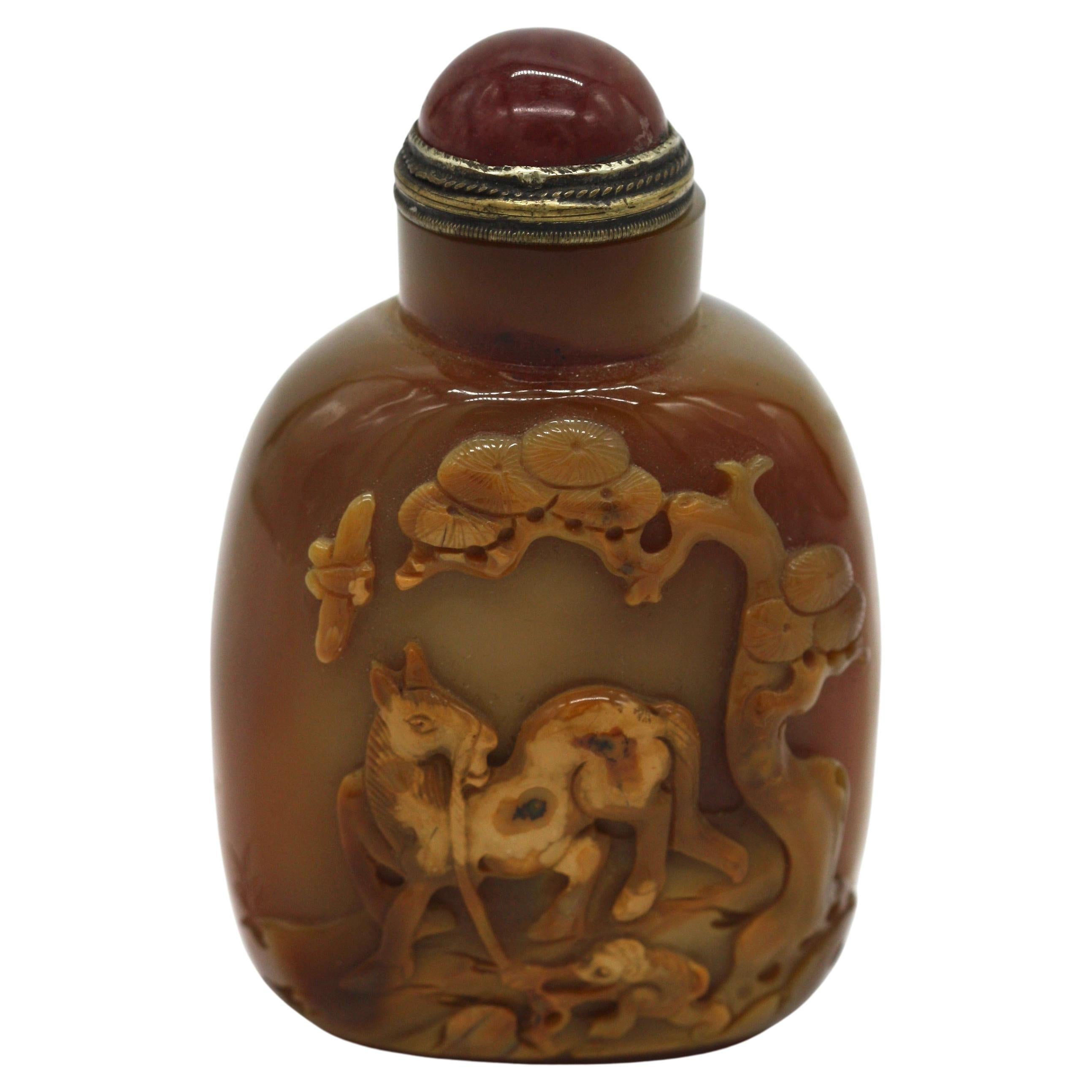
Snuff Bottles
Origins and Cultural Background
Snuff was introduced to China during the late Ming Dynasty through trade with Europe, but it was during the Qing Dynasty (1644–1912) that snuff and snuff bottles truly flourished. At that time, Chinese people believed that powdered tobacco could help relieve common ailments such as colds, headaches, nasal congestion, and stomach discomfort. Snuff was taken by inhaling small amounts through the nose, making it necessary to carry the powder in specially designed containers.
Snuff bottles were originally practical objects, but they quickly evolved into luxury items among the imperial family, court officials, and scholars. Emperors such as Kangxi, Yongzheng, and Qianlong were known to be avid collectors and patrons of snuff bottle craftsmanship. As a result, snuff bottles became symbols of status, taste, and refinement, often exchanged as gifts within the court and among elites.
Although the everyday use of snuff gradually disappeared after the founding of the Republic of China in 1912, snuff bottles survived as art objects. Today, they are appreciated mainly for their craftsmanship, decorative beauty, and collectible value.
Materials and Styles
Traditional Chinese snuff bottles were made from a wide variety of materials, reflecting both artistic creativity and technical skill. Common materials include glass, jade, agate, crystal, porcelain, enamel, lacquer, ivory (now restricted), bamboo, and metal. Each material required different carving, polishing, or firing techniques, resulting in diverse styles and finishes.
Among these, glass snuff bottles are particularly important in Beijing, as imperial glass workshops were established during the Qing Dynasty to serve the royal court. Beijing thus became a major center for glass snuff bottle production, a tradition that still influences modern craftsmanship.
Snuff bottles often feature auspicious symbols, landscapes, flowers, birds, calligraphy, historical stories, and scenes of daily life. These designs reflect traditional Chinese aesthetics and beliefs, such as wishes for longevity, prosperity, harmony, and good fortune.
Inside-Painted Snuff Bottles
The most charming and truly fascinating snuff bottles are those with paintings on their interior walls, known as inside-painted snuff bottles. This remarkable art form represents one of the highest levels of skill in miniature painting.
Inside painting is done by inserting a specially shaped, extremely fine brush through the narrow mouth of the bottle and painting the image in reverse on the inner surface. Early artists first coated the interior with iron oxydal mixed with water, creating a slightly rough, milky-white surface that allowed pigments to adhere. Once prepared, artists carefully painted landscapes, flowers, birds, figures, calligraphy, or even detailed narrative scenes.
The entire process requires extraordinary patience, precision, and control. Even a small mistake is difficult to correct. Completing a single bottle could take hours or even an entire day of painstaking work, despite the miniature size. These bottles are truly works of art rather than simple souvenirs.
The earliest known examples of inside-painted snuff bottles date back to the 1880s, making this a relatively late but highly innovative development in snuff bottle history. Over time, different regional styles emerged, with Beijing becoming one of the most influential centers.
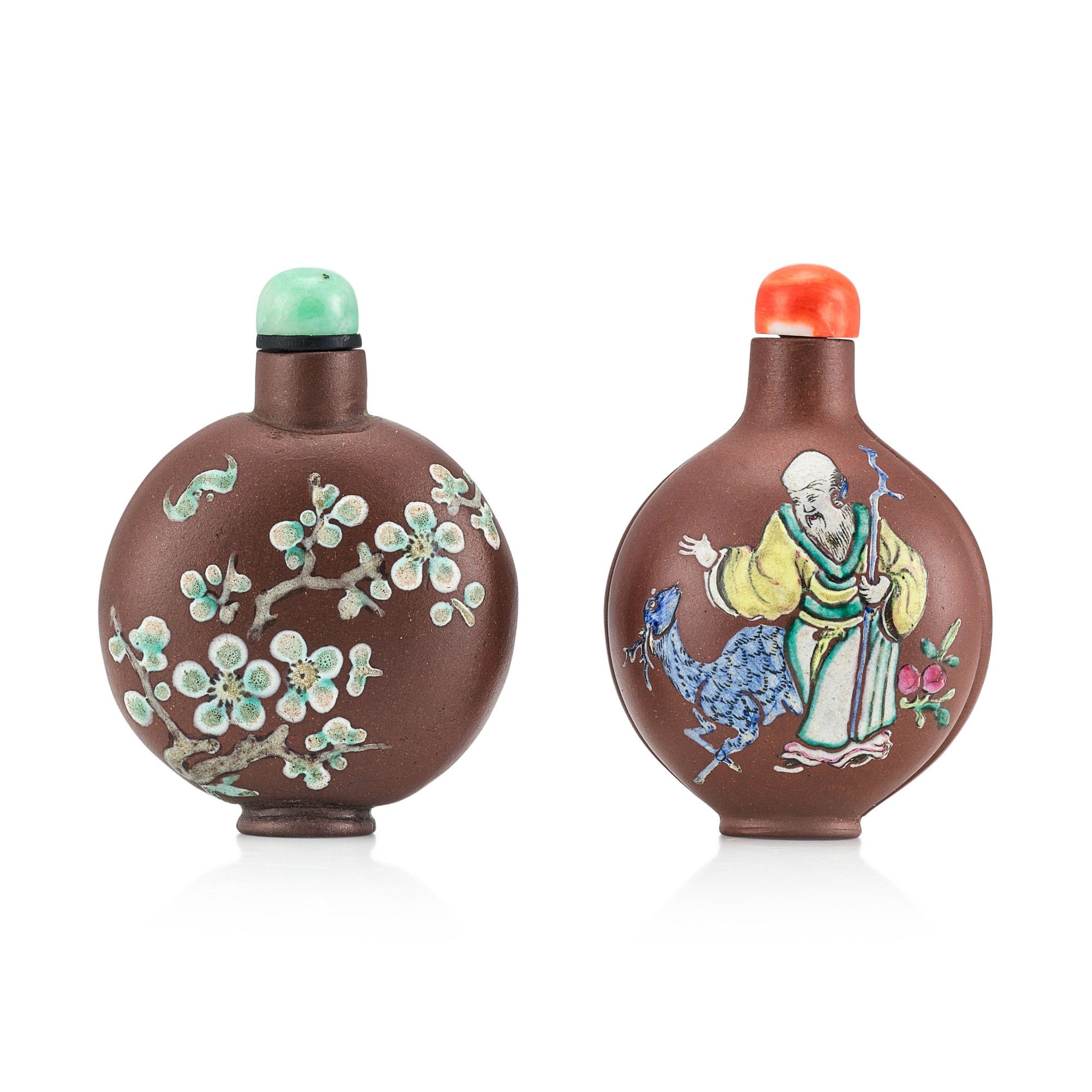
Snuff Bottles
Why Snuff Bottles Are Popular Souvenirs in Beijing
For foreign visitors, snuff bottles offer a unique way to connect with traditional Chinese culture. They are small, portable, and visually striking, making them easy to carry home. More importantly, they represent a blend of Chinese medicine, imperial lifestyle, fine arts, and symbolism.
In Beijing, snuff bottles are often associated with the city’s imperial past, as many of the finest historical examples were produced for the Qing court. Buying a snuff bottle in Beijing is therefore not just a shopping experience, but also a cultural one, especially when visiting places related to imperial history such as the Forbidden City or nearby traditional markets.
Snuff bottles also appeal to collectors. Antique or master-level inside-painted bottles can be valuable collectibles, while modern handcrafted pieces allow travelers to appreciate the art form at a more accessible price point.
Where to Buy Snuff Bottles in Beijing
Visitors can find snuff bottles in many souvenir shops, antique markets, and cultural streets across Beijing. Popular places include:
- Panjiayuan Antique Market: The largest antique market in Beijing, offering a wide range of snuff bottles from inexpensive modern pieces to higher-end collectible items. Bargaining is common.
- Liulichang Cultural Street: Known for traditional Chinese art, calligraphy, and antiques. Snuff bottles here often focus on craftsmanship and artistic quality.
- Museum gift shops: Some museums sell high-quality reproductions or artist-signed pieces, which are reliable choices for authenticity.
- Specialty handicraft stores: Found near major tourist attractions, these shops usually sell well-crafted modern snuff bottles suitable as gifts.
Shopping Tips for Foreign Travelers
- Understand the difference between antique and modern pieces: Genuine antiques are rare and expensive; most items sold to tourists are modern handcrafted works.
- Check the painting quality: Look for clean lines, balanced composition, and detailed brushwork, especially in inside-painted bottles.
- Ask about the artist: Some modern bottles are signed by contemporary artists, which can add value.
- Consider your purpose: Whether as a souvenir, decorative object, or collectible, choose accordingly.
- Avoid restricted materials: Antique ivory snuff bottles are subject to strict regulations and should be avoided.
A Small Object with a Big Story
Though no longer used for holding snuff, Chinese snuff bottles continue to captivate people around the world. They represent centuries of cultural exchange, artistic innovation, and refined taste. For visitors to Beijing, purchasing a snuff bottle is more than just shopping—it is a way to take home a tangible piece of China’s imperial history and artistic heritage.
Compact, elegant, and rich in meaning, snuff bottles remain one of Beijing’s most culturally rewarding traditional souvenirs.