
Location

Gubeikou Town, Miyun County, Beijing, China
Reasons to visit
World Cultural Heritage; A well-knonw Great Wall section for hiking
Opening Hours
- 8:00-17:00 daily
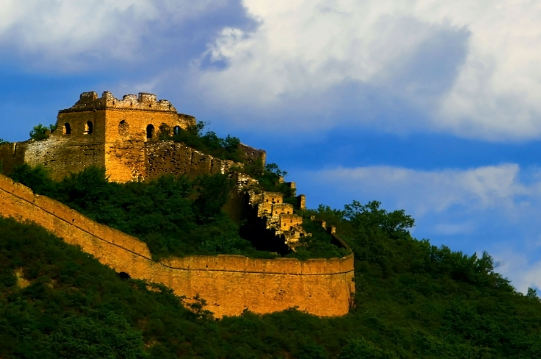
Stretching along the majestic Yanshan Mountain range in northeastern Beijing, the Gubeikou Great Wall (古北口长城) is one of the most complete and historically significant parts of the Great Wall system. It stands as a silent witness to centuries of warfare, strategy, and architectural brilliance. Known as the “Gateway to the Capital,” Gubeikou guarded the northeast approach to Beijing and was considered a vital military stronghold throughout Chinese history.
From its commanding position, Gubeikou connects the plains of Liaoning and Inner Mongolia with the heartland of China. The Chaohe River flows to its west, while the Panlong Mountain rises to its east, forming a natural defensive barrier that made this area a battleground for more than 130 wars across different dynasties.
Historical Evolution
Early Fortifications: The strategic importance of Gubeikou can be traced back over 2,500 years. As early as the Western Zhou period, fortifications were established here. During the reign of Emperor Wu of the Han Dynasty, military garrisons were stationed at this pass to defend against northern nomads.
Northern Qi and Ming Dynasties: The first version of the Great Wall at Gubeikou was built in 555 AD during the Northern Qi Dynasty, marking the earliest discovered section of the Great Wall in Beijing. During the early Ming Dynasty (1368–1644), Emperor Zhu Yuanzhang ordered General Xu Da to rebuild the wall with stone reinforcements, strengthening its defense. Later, in 1569, General Qi Jiguang, the renowned commander of the Ji Garrison, further renovated the Gubeikou Wall. He preserved the Northern Qi structure and constructed a second brick wall outside it, forming the famous “double-layered wall”, a feature unique to Gubeikou.
Architectural Features
The Gubeikou Great Wall is composed of four major sections — Wohu Mountain, Panlong Mountain, Jinshanling, and Simatai — together forming a complete defense system. The wall extends for about 25 miles (40 km) and includes 143 watchtowers, 14 beacon towers, 16 strategic passes, and three citadels.
Double-Layered Structure
The older Northern Qi Wall was mainly built of tamped earth and stones, while the later Ming Wall was reinforced with grey bricks and large stone slabs. These two walls, running parallel for several kilometers, showcase the evolution of ancient Chinese military engineering.
Watchtowers and Barrier Walls
The watchtowers vary greatly in design — some are single-storied, others double or triple-storied. Their roofs feature different shapes such as flat, dome, and octagonal forms. Some towers even have barrier walls perpendicular to the main wall, providing protection for soldiers and blocking enemies who managed to climb onto the battlements.
Inscribed Bricks and Qilin Relief
Thousands of inscribed bricks remain on the Gubeikou Wall, engraved with the names of military units and construction dates, such as “Built by Ningxia Camp, 5th Year of Wanli” and “Constructed by Zhenwu Camp, 6th Year of Wanli.” These inscriptions not only trace the wall’s construction history but also represent one of the earliest examples of accountability in ancient Chinese engineering. Near the 13th watchtower west of Simatai Reservoir stands a brick relief featuring a Qilin (a mythical beast) — the only one of its kind along the entire Great Wall.
Major Sections to Explore
Wohu Mountain Great Wall (卧虎山长城)
Named for its resemblance to a crouching tiger, this section stretches for over 40 km with 172 watchtowers and 14 beacon towers. It contains several unique features, including “Twin Towers”, two towers of different heights standing side by side, showcasing the exquisite brick-arch craftsmanship of the Ming era. The full route takes about 4–6 hours to complete and is suitable for visitors with strong physical fitness and hiking experience.
Panlong Mountain Great Wall (蟠龙山长城)
The Panlong (Coiling Dragon) section winds gracefully along the mountain ridges like a dragon in motion. It is best known for General Tower, Twenty-Four-Eye Tower, and Haowang Tower. The General Tower, in particular, was one of the fiercest battle sites during the Anti-Japanese War. This section remains largely unrestored, offering visitors an authentic glimpse into the raw, ancient beauty of the Great Wall.
It’s recommended to start from the General’s Tower (将军楼) on the west side and follow the wall eastward to Ershisiyanlou (The Twenty-Four Eyes Tower). The entire walk takes around 4 hours, suitable for families and first-time Great Wall hikers.
Simatai Great Wall (司马台长城)
Located within the Gubei Water Town area, Simatai is the only section of the Great Wall that retains its original Ming Dynasty appearance. Simatai is the only part of the Great Wall open for night tours, where illuminated ramparts create a breathtaking view of a golden dragon glowing in the mountains. Visitors need to purchase both the Gubei Water Town ticket and the Simatai Great Wall ticket, and advance booking is highly recommended due to limited capacity.
Strategic and Cultural Significance
Gubeikou has long been called the “Lock and Key of the Capital”, as it guarded the northeastern gateway to Beijing along with Shanhaiguan and Juyongguan passes. During the Ming and Qing dynasties, it was one of the eleven main garrisons of the Great Wall and a pivotal defense point for the empire. Its battlefield legacy continues to echo in the ruins of fortresses and ancient towers, which once stood against invasions from the north.
Today, Gubeikou stands not only as a historical military relic but also as a symbol of the Chinese people’s resilience and unity.
Transportation
The best way to reach Gubeikou Great Wall is by joining a local tour, which often includes hotel pickup, an English-speaking guide, and a flexible schedule covering several wall sections. If you choose public transportation, you can take the suburban railway S5 Line to Gubeikou Station, then walk or transfer to local transport... The suburban line operates with limited daily schedules, so it’s advisable to check the timetable in advance.
Travel Tips & Suggestions
Preparation
Documents: Bring a valid ID or passport for ticket purchase and entry.
Clothing:
Spring/Autumn: Long-sleeved jacket and hiking shoes.
Summer: Lightweight clothing, sunscreen, and hat.
Winter: Warm coat, gloves, and scarf.
Supplies: Carry water, snacks, camera, portable charger, and hiking poles if needed.
Time Arrangement
Depending on the chosen section:
Wohushan Great Wall – reserve a full day for the complete hike.
Panlongshan or Simatai – can be explored in half a day to one full day depending on your pace.
Safety Tips
Some parts of the Great Wall are steep and uneven, so wear proper hiking shoes and avoid getting too close to the edge.
Take breaks regularly to preserve energy, and in case of strong winds or rain, it’s safer to pause or reschedule the hike.
Cultural Experience
Gubeikou Town has a rich historical and cultural background. You can visit:
Yangling Temple (杨令公祠)
Temple of the Medicine King (药王庙)
God of Wealth Temple (财神庙)
Inside Gubei Water Town, you’ll also find intangible cultural heritage workshops such as the Kite Museum, Yongshun Dyehouse, and Shadow Play Museum, where you can try traditional handicrafts and learn about folk culture.
Accommodation
Gubei Water Town: Offers hotels, boutique inns, and guesthouses near Simatai. Many have hot springs and great views of the illuminated wall.
Gubeikou Town: A more local experience with affordable homestays and farmhouses, perfect for travelers seeking cultural immersion