
Cloisonné, formally known as copper-bodied cloisonné enamel, is a traditional Chinese decorative art that represents the fusion of enamel-making techniques introduced from abroad with indigenous Chinese metal-enameling craftsmanship. Using copper as the base material and colored enamel glazes as decoration, cloisonné objects are created through a series of meticulous processes, including shaping the copper body, bending and fixing fine copper wires to form patterns (cloisonné), filling the compartments with enamel, firing, polishing, and gilding.
Originating in Beijing, cloisonné has a history of more than 500 years and is recognized today as a National Intangible Cultural Heritage of China. Alongside Jingdezhen porcelain and Fuzhou lacquerware, Beijing cloisonné is regarded as one of the Three Treasures of Traditional Chinese Arts and Crafts.
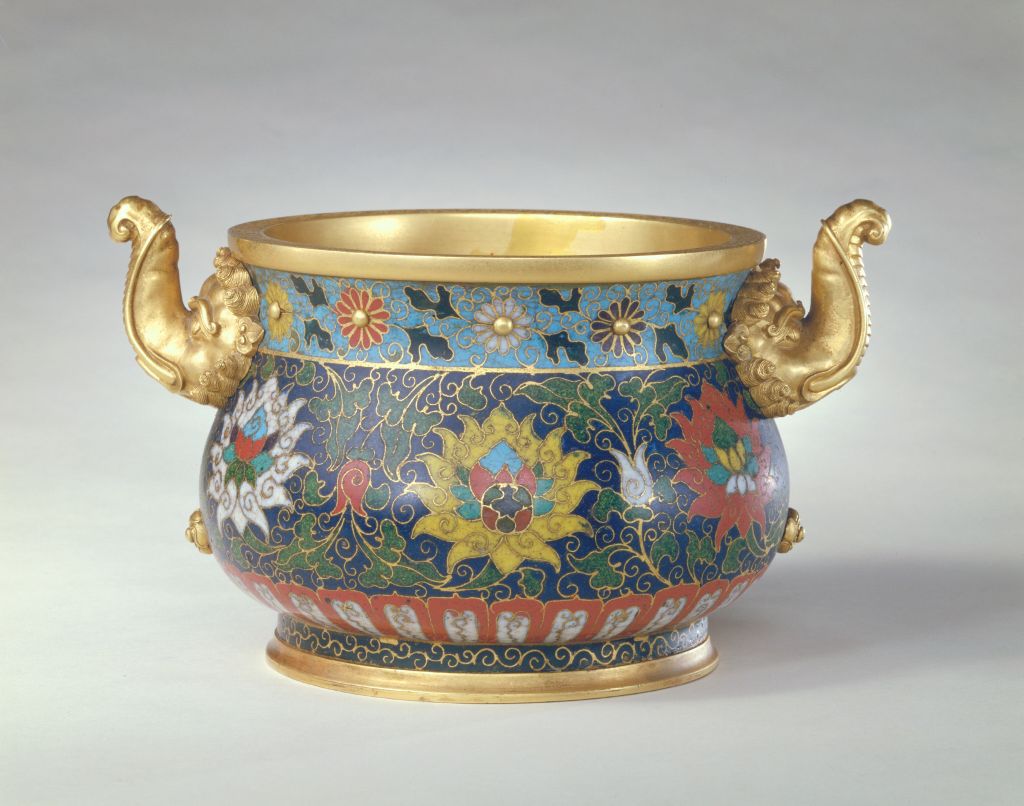
Cloisonné
Historical Background
Cloisonné in China dates back to the Song Dynasty, when enamel techniques were introduced from the Middle East to China in the 13th century. Early records, such as Xin Zeng Ge Gu Yao Lun, refer to “Dashi ware,” which is considered the prototype of Chinese copper-bodied enamel and the forerunner of cloisonné.
Chinese craftsmen combined these foreign techniques with traditional Chinese metalworking, painting, and engraving skills, gradually developing a distinctly Chinese style of cloisonné. Existing examples show that cloisonné objects were already produced during the Xuande reign of the Ming Dynasty, while the craft reached its peak during the Jingtai period (1450–1457). The dominant blue enamel of this era gave rise to the name “Jingtai Blue” (Jingtailan).
The term “Jingtailan” later appeared in records of the Qing imperial workshops. During the Kangxi reign, cloisonné became an officially recognized court art, and it was widely used throughout the imperial palaces in the Qianlong period. From the early Jiaqing reign onward, production gradually declined, and only a small number of works survived into the Daoguang era. Social upheavals in modern times further weakened the craft.
After 1949, cloisonné was revived under state-supported preservation programs. It was listed as a National Intangible Cultural Heritage in 2006, and in 2014, it was used as a national gift to foreign guests at the 2014 APEC meeting. In December 2017, Specifications for English Translation and Writing in Public Service Areas stipulated that the English name of 景泰蓝 is "Cloisonne". In September 2025, the cloisonné appreciation plate Qinian Lanyun (Pray for the New Year with Blue Rhythm) was first launched at the China International Fair for Trade in Services (CIFTIS).
Materials and Characteristics
Traditional cloisonné objects are made with a copper body, as copper is soft, durable, and easy to hammer and shape. The copper base provides a strong foundation for the intricate decorative work that follows. Thin copper strips are bent by hand and attached to the surface to form delicate patterns, creating small compartments known as “cloisons.”
These compartments are then filled with colorful enamel glazes made from mineral powders. After repeated firing in a kiln, the surface becomes glossy, smooth, and vibrant. The final product is often gilded with gold, giving cloisonné its rich, elegant appearance.
Cloisonné is best known for its bright colors, especially shades of blue, turquoise, red, yellow, and white, combined with traditional Chinese motifs such as dragons, phoenixes, lotus flowers, peonies, clouds, and auspicious symbols. The designs reflect Chinese aesthetics and cultural values, making each piece both decorative and meaningful.
The Complex Making Process
The charm and uniqueness of cloisonné lie in its elaborate and highly complicated production process, which requires great patience and craftsmanship. Creating a single piece of cloisonné can take about six months or even longer, especially for large or finely detailed works produced by experienced artisans, such as those at the Beijing Enamel Factory. The traditional production process includes several main steps:
- Base-hammering: A copper sheet is hammered and shaped into the desired form, such as a vase, bowl, or decorative object.
- Copper-strip inlay: Thin copper wires are carefully bent by hand and fixed onto the surface of the copper body to outline intricate patterns.
- Soldering: The copper wires are soldered firmly in place to ensure durability.
- Enamel-filling: Colored enamel paste is filled into each compartment created by the copper strips.
- Enamel-firing: The object is fired in a kiln at high temperatures. This step is repeated several times to achieve rich colors and an even surface.
- Polishing: After firing, the surface is polished to smooth out the enamel and copper wires.
- Gilding: Finally, exposed copper parts are gilded, traditionally with gold, to enhance the brilliance and prevent oxidation.
Where to Buy Authentic Cloisonné in Beijing
For foreign tourists, choosing a reliable place to buy cloisonné is key to avoiding fakes and ensuring quality. Here are the top recommendations in Beijing, all easily accessible from major tourist attractions:
1. Beijing Enamel Factory: As the most prestigious cloisonné manufacturer in China, the Beijing Enamel Factory is a must-visit. Founded in 1956, it preserves the traditional craftsmanship of cloisonné and offers a wide range of products, from small souvenirs like keychains and chopsticks to high-end artworks such as vases and screen paintings. You can even watch craftsmen at work here, gaining a firsthand understanding of the production process. The factory’s showroom provides English introductions to each piece, and the staff are happy to answer questions about maintenance and craftsmanship. Address: No. 2, South Street of Xingfu, Chaoyang District.
2. Souvenir Shops Near the Forbidden City and Tiananmen Square: The souvenir shops around these iconic landmarks offer a variety of cloisonné products tailored for tourists. While the selection may be more focused on small souvenirs (like cloisonné bracelets and small boxes), the quality is generally guaranteed, and most items come with English descriptions. This is a convenient option if you’re visiting these attractions and want to pick up a souvenir on the go.
3. Panjiayuan Flea Market: For those who enjoy browsing and bargaining, Panjiayuan Flea Market (Beijing’s largest antique and craft market) has many stalls selling cloisonné. Here, you can find both modern reproductions and vintage cloisonné pieces at various price points. However, it’s advisable to do some research beforehand or bring a local guide, as there may be imitations. Look for pieces with smooth enamel surfaces, clear patterns, and solid copper bases to ensure authenticity.
Tips for Buying and Maintaining Cloisonné
When buying cloisonné, consider your budget and purpose. Small souvenirs like chopsticks or keychains start at around 50-200 RMB, while medium-sized vases or boxes range from 300-1,000 RMB. High-end artworks by master craftsmen can cost tens of thousands of RMB, making them ideal for serious collectors.
To maintain your cloisonné piece, avoid dropping it or exposing it to harsh chemicals (like detergents). Clean it gently with a soft cloth; if there’s dirt in the crevices, use a soft-bristled brush to remove it. Keep it in a dry, cool place to prevent the copper base from rusting.